The Proven Framework for Transforming Students Into Leaders: Why Healing-Centered Pedagogy Works
We refuse to accept that our children are broken.
We refuse to believe that trauma defines their potential. And we absolutely refuse to let another generation of brilliant minds get crushed under the weight of systems designed to contain rather than cultivate their power.
The old education model is dying: and good riddance. What's rising in its place is something revolutionary: healing-centered pedagogy. Not therapy disguised as teaching. Not feel-good rhetoric without substance. But a proven framework that transforms students from survivors into leaders, from victims of their circumstances into architects of their futures.
This isn't theory. This is revolution in practice.
The Framework That Changes Everything
Healing-centered pedagogy operates on a radical premise: that our students' greatest challenges are also their greatest strengths. That the communities labeled "at-risk" are actually treasure troves of resilience, wisdom, and untapped leadership potential.
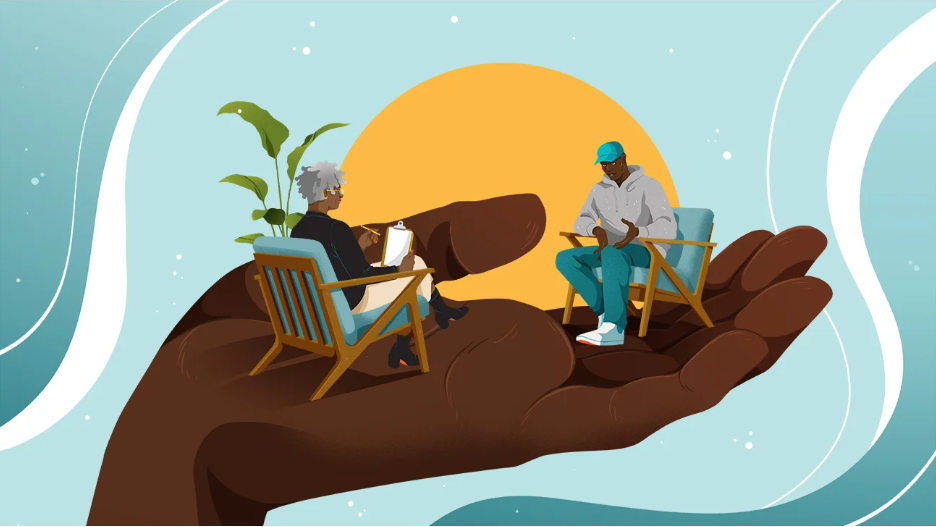
We've seen this truth play out in places like Lincoln Heights, Ohio: America's first Black city, where communities have been practicing healing-centered approaches long before academics gave it a name. When a community survives redlining, systemic disinvestment, and generations of educational neglect, they don't just endure: they innovate. They create. They lead.
The framework rests on three non-negotiable pillars:
1. Agency and Ownership: Students as Co-Creators
Traditional education treats students like empty vessels waiting to be filled. Healing-centered pedagogy recognizes them as knowledge holders, problem solvers, and change agents from day one.
We empower students as co-creators of their learning environment. Not token participation. Real decision-making power in school policies, curriculum design, and community problem-solving initiatives.
When students in Chicago Public Schools started leading restorative justice circles instead of being sentenced to detention, suspension rates plummeted while academic engagement soared. Why? Because young people stopped seeing themselves as problems to be managed and started recognizing themselves as solutions in motion.
We build resilience by reframing trauma. Instead of asking "What's wrong with you?" we ask "What happened to you, and how can we heal together?" This shifts the narrative from individual pathology to collective strength.
2. Community-Centered Design: Wisdom From the Margins
The communities closest to problems are closest to solutions. Healing-centered pedagogy doesn't just include families: it elevates them as educational partners and wisdom keepers.
We integrate family and community knowledge because grandmother's lessons about perseverance are just as valid as any textbook chapter on resilience. When schools in Oakland started incorporating community elders into leadership development programs, students didn't just improve academically: they developed a deeper sense of cultural pride and purpose.
We prioritize racial equity not as diversity theater, but as educational justice. This means culturally responsive teaching that doesn't just acknowledge difference but celebrates it as strength. It means hiring educators who reflect our communities and understand that representation isn't just about looking like our students: it's about seeing their unlimited potential.
3. Sustainable Leadership Development: Skills for the Long Revolution
Leadership isn't a personality trait. It's a set of learnable skills developed through practice, mentorship, and real-world application.
We strengthen peer-to-peer learning because students often teach each other better than any adult ever could. When young people become instructional partners, knowledge-sharers, and mentors, they develop the communication skills, empathy, and confidence that define transformational leaders.
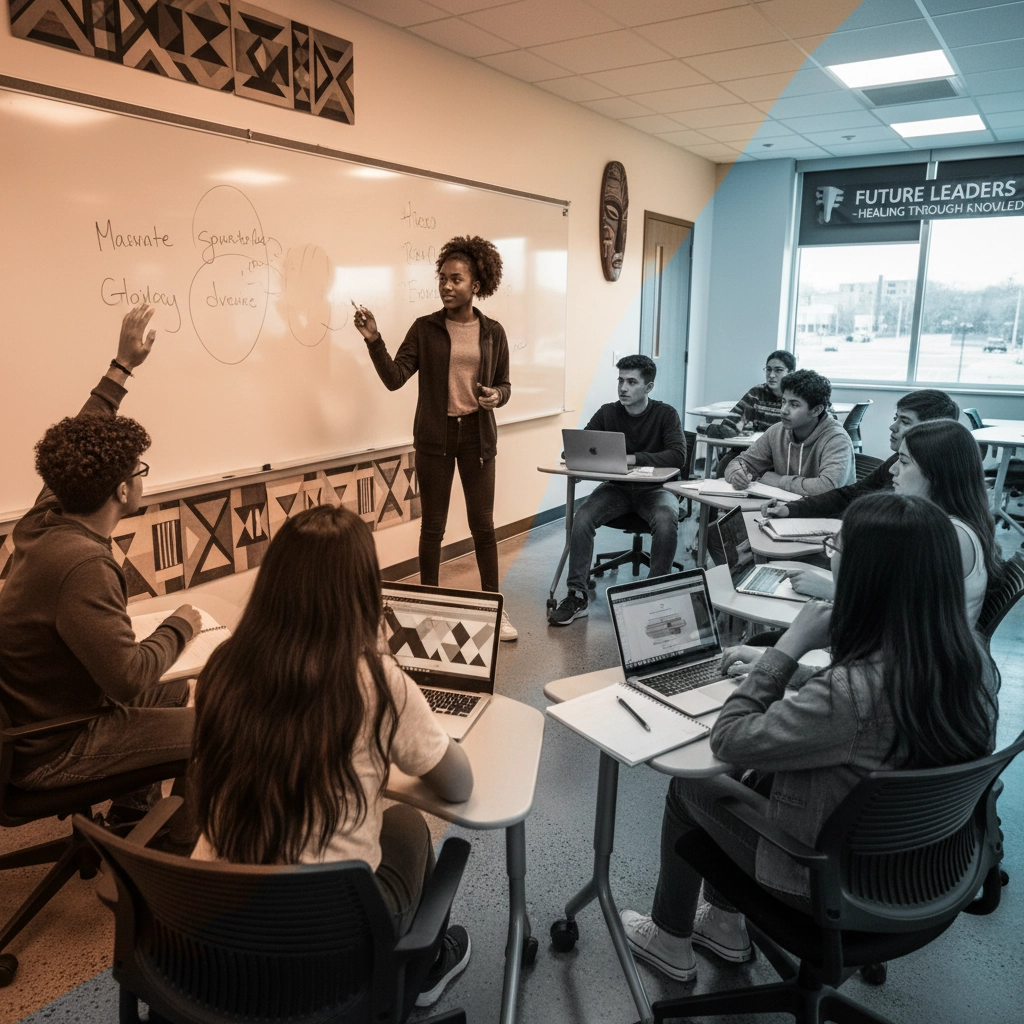
We create "whole child" environments that address basic needs first. You can't develop leaders when students are worried about safety, food security, or family stability. Healing-centered schools become community hubs that connect families to resources, mental health support, and economic opportunities.
Why This Framework Actually Works
The data is undeniable. Districts implementing healing-centered approaches report:
40% reduction in disciplinary incidents
Significant increases in academic engagement
Higher teacher retention rates
Students who actively advocate for their communities
But the real proof isn't in statistics: it's in the students themselves.
Take Marcus, a junior from Lincoln Heights who went from chronic suspension to student body president after his school implemented restorative justice practices. "I always knew how to lead," he told us. "I just needed adults who saw that leadership potential instead of just seeing my anger."
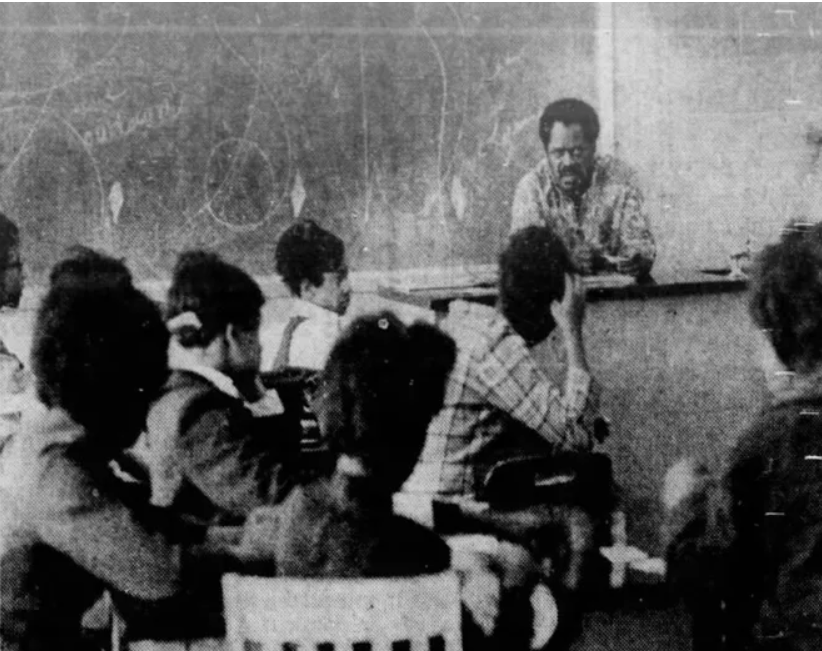
Or consider Aisha, whose "problematic" questions in class were reframed as critical thinking skills that landed her a full scholarship to study educational policy. "They taught me that my questions weren't disruption: they were research skills in action."
The framework works because it's built on truth: that healing and learning are inseparable processes. That leadership develops in communities of trust. That students closest to educational inequity are also closest to educational innovation.
The Lincoln Heights Model: Leadership Born From Struggle
Lincoln Heights didn't become America's first incorporated Black city by accident. It became a symbol of what's possible when communities take control of their own development, their own education, their own futures.
The families who built Lincoln Heights understood something that mainstream education is just beginning to grasp: that resilience isn't developed through comfort: it's cultivated through supported struggle. That leadership isn't about individual achievement: it's about collective liberation.
When we center healing-centered pedagogy, we're not inventing something new. We're amplifying something that communities like Lincoln Heights have always known: that our young people don't need saving. They need support, resources, and adults who believe in their power to change the world.
The Call to Revolutionary Action
We're not asking for incremental change. We're demanding educational transformation.
We call on educators to abandon deficit-based thinking and embrace asset-based practice. Your students aren't problems to be solved: they're leaders to be developed.
We call on communities to reclaim their role as educational partners. Your wisdom matters. Your experience counts. Your voice is needed in these decisions.
We call on policymakers to fund healing-centered approaches with the same urgency they once funded punishment-based systems. Invest in what works: community schools, mental health support, restorative practices, and leadership development programs.
The old education system is dying because it was never designed to develop leaders: it was designed to create workers. Compliant, predictable, manageable workers.
But our communities don't need more workers. We need leaders. Healers. Innovators. Change agents who understand that their individual success is inseparable from collective liberation.
Healing-centered pedagogy isn't just an educational framework: it's a blueprint for transformation. It's how we turn our greatest challenges into our most powerful assets. It's how we ensure that the next generation doesn't just survive the systems that failed us: they transform them completely.
The revolution in education isn't coming. It's here. And it's being led by the students we once wrote off, the communities we once ignored, and the educators brave enough to choose healing over harm.
Are you ready to join us?
Visit EDUC8theWORLD to learn how your community can implement healing-centered approaches that develop leaders, not just learners. Because the future doesn't need better students: it needs bolder leaders.
And they're already in your classrooms, waiting for adults brave enough to see their power.
Comments